
Sourcing
How to Source 3D Artists and Quantitative Traders for Web3 Projects
Unlock talent for Web3 projects: 3D artists & quantitative traders

Senior Tech Talent Sourcer · Matchr

Continuing our series dedicated to talent acquisition for Web3 enterprises, this article delves deeper into the intricate process of finding and recruiting exceptional professionals. While previous articles have provided insights into sourcing for blockchain engineers and sourcing for contract auditors, sales, and marketing experts, the exploration is far from over. From the multifaceted domain of 3D animation to the complex realm of quantitative trading, there’s a wealth of talent to uncover and engage with.
How to Source 3D Artists for Web3 Projects
As the world increasingly digitizes, the demand for skilled professionals who can bring the virtual world to life is rising. One such group of professionals is 3D animators or artists, who use their expertise in computer graphics to produce three-dimensional images and animations. The tech skills required of 3D artists include proficiency in industry-standard software like Maya, Adobe Suites, 3DS Max, Substance Painter and Designer, ZBrush, 3DCoat, and Blender, as well as a strong understanding of digital modeling and texturing techniques.
Within Web3, the metaverse is a major area of focus, and 3D artists are instrumental in creating the virtual environments that make up this digital realm. NFTs, or non-fungible tokens, are another area where 3D artists play a key role, as they help to create unique digital assets that are bought and sold on blockchain marketplaces. Gaming is another industry where 3D artists are in high demand, as they help create immersive gaming experiences that captivate players.
Digital fashion is another area where Web3 companies are finding success, and 3D artists are instrumental in bringing these virtual clothing designs to life. With the rise of digital fashion shows and digital clothing collections, 3D artists are increasingly being called upon to create stunning, lifelike images that showcase these designs in the best possible light.
Where to Find 3D Artists to Bring Web3 Projects to Life?
One option is to search for artists on LinkedIn, a social platform where professionals can showcase their skills and connect with potential employers. Depending on your needs, try to include such titles and keywords in your search: “3D artist”, “3D animator”, “3D designer”, “3D visualizer”, “3D generalist artist”, “3D environment artist”, “3D character artist”, “3D props”, “3D modeling”, “texture work”, “surface modeling”, “3D rendering”, and so on.
Alternatively, instead of looking for people, try to first look for LinkedIn groups dedicated to 3D art, animation, design, gaming, and fashion. These are the places where creators actively share their works, exchange knowledge, and discuss trends. When you are a member of the group, you can click on group members, select “show all” and browse through the list of people. A pro tip is that you can message fellow group members directly from there and save some of your inmail credits. However, these messages are limited to 15 per month for all groups, so use them wisely.
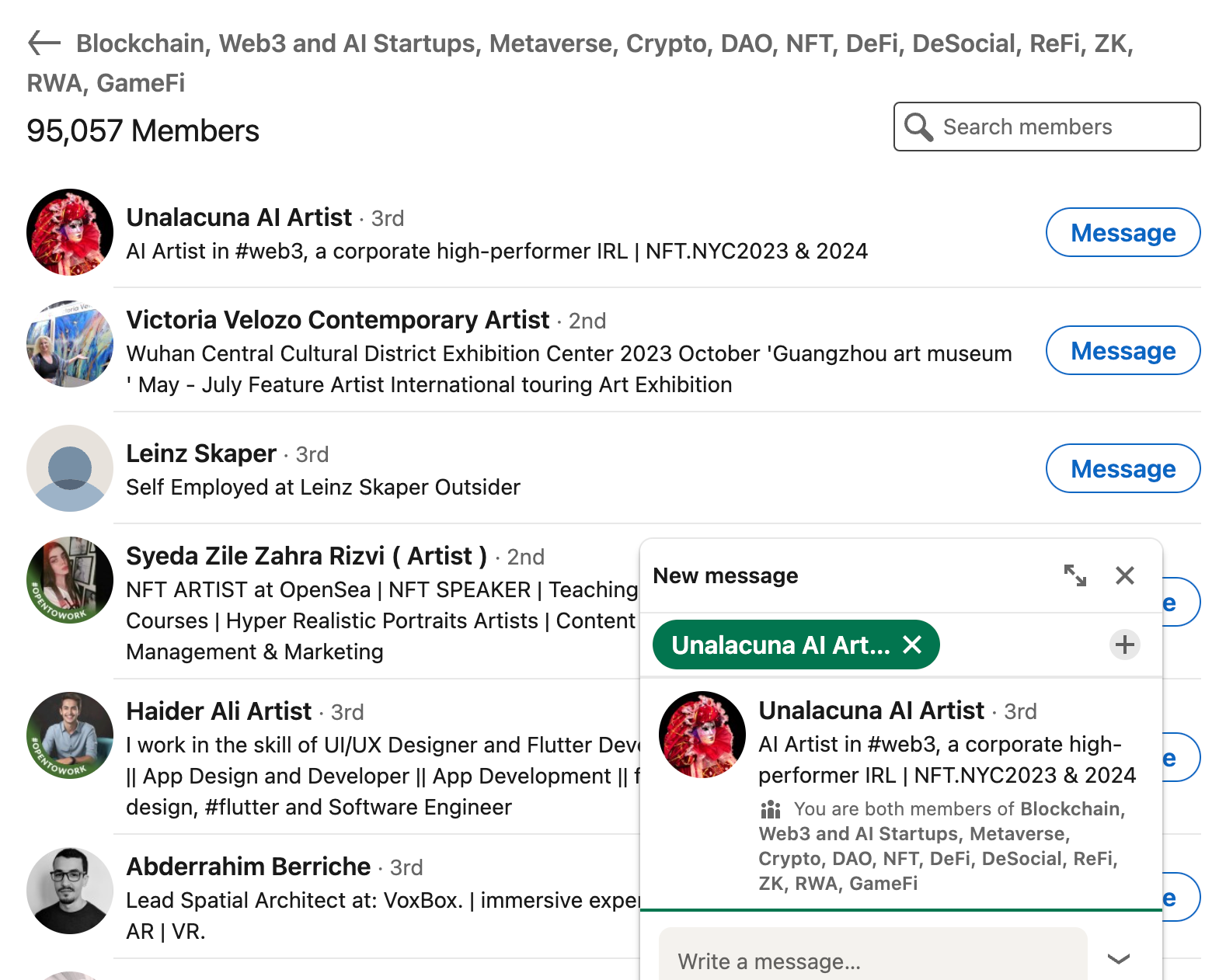
While searching for artists, never limit yourself to LinkedIn search only as there are multiple other platforms where they’re showcasing their portfolios, some of which are catered specifically to 3D and some are popular among all design community members.
Behance is a platform that can be useful for finding 3D artists, as it is a portfolio site where artists can display their work and share it with a wider audience. The search on the website allows you to filter people by creative fields, location, tools, availability, and even education. Creative fields include 3D Art, Modeling, and Motion. The search bar allows you to add additional keywords to the search, for example, NFT or Metaverse. You can sort results based on most followed, most appreciated, most viewed, most recent, curated, and recommended. The good thing is that you can outreach people through Behance messaging or find them on other websites, as nearly everyone includes links to their other pages on their profiles.

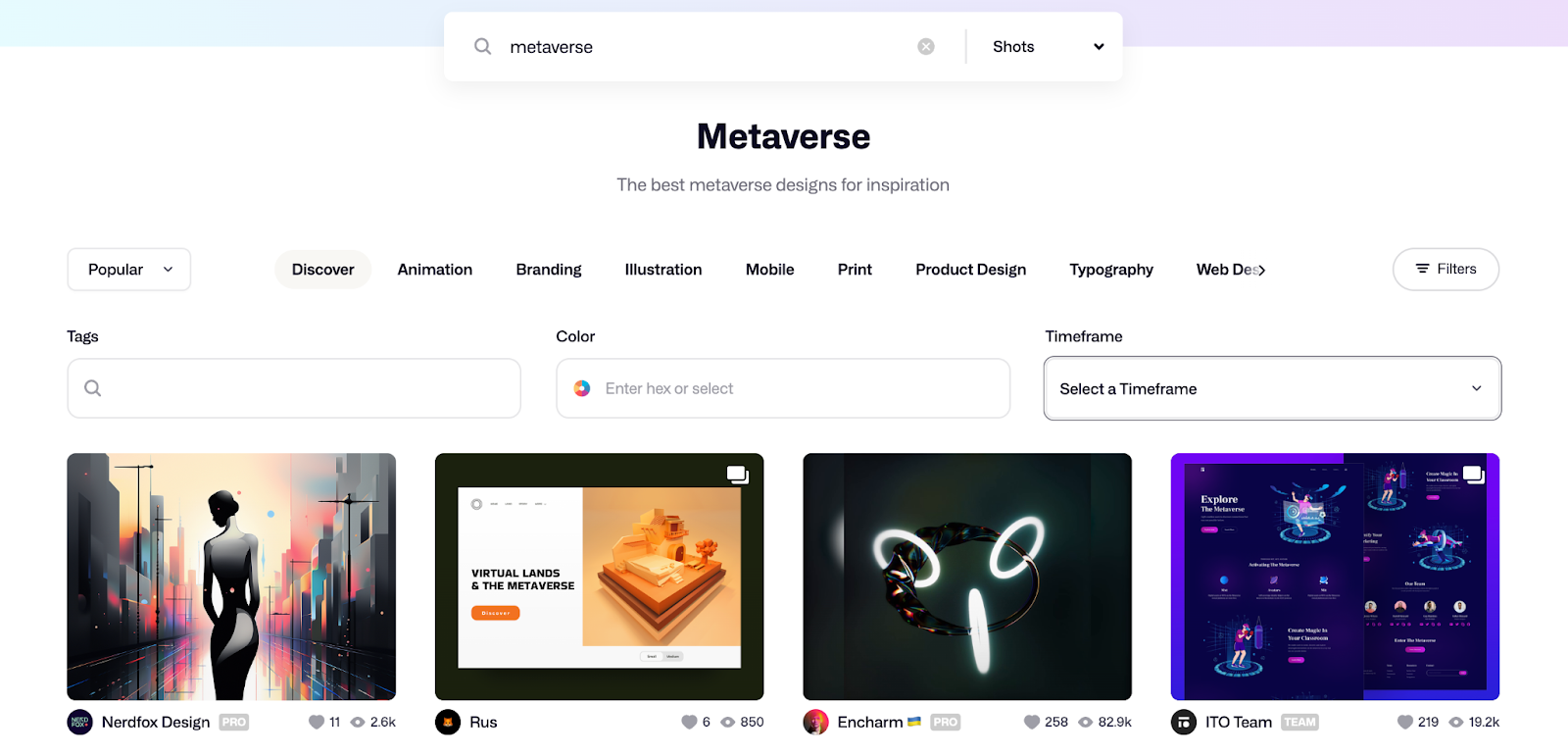
Another great platform to connect with designers is Dribble. It’s a social networking platform for designers, where they showcase snippets of their work and a place where you can connect and hire them. It allows you to filter designers based on their types (e.g. 3D), locations, work type they prefer, experience level, hourly budget, and the previous company or brand they collaborated with. You can also add your keywords to the search.
The free version allows you to see only a limited preview and you can’t get in touch with people through the platform straight from the designer search. However, you can do a cross-search on other platforms using their names or nicknames. If you want to get a hiring suite, for 10 dollars a day (billed monthly) you can get access to the entire database and unlimited messages, as well as other perks.
Alternatively, you can use a search bar on the website and filter out more thoroughly using tags. If you find someone suitable for your job, you can get in touch with them using the free version of Dribble. However, you have only 10 free messages per month. It shouldn’t be a blocker for you, as profiles have an “about” section where people normally add links to other platforms where they’re active.
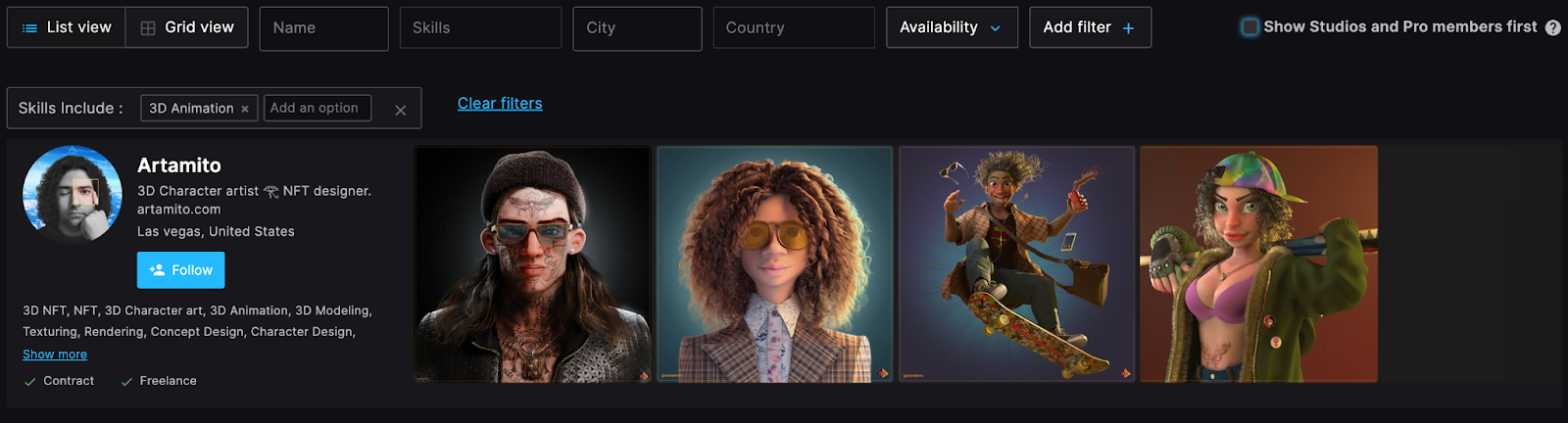
One more place to source for your 3D artist is a platform called Artstation. It’s another platform for creatives to showcase their works, and it’s more tailored for those working in gaming, film, media, and entertainment. You can filter by skills, location, availability, followers, and software and add your keywords to the search using the search bar. After setting up your profile, you can reach out to candidates via messages directly on the platform. Some people indicate their emails which you can easily reveal and contact them with a more detailed proposal via email campaign.
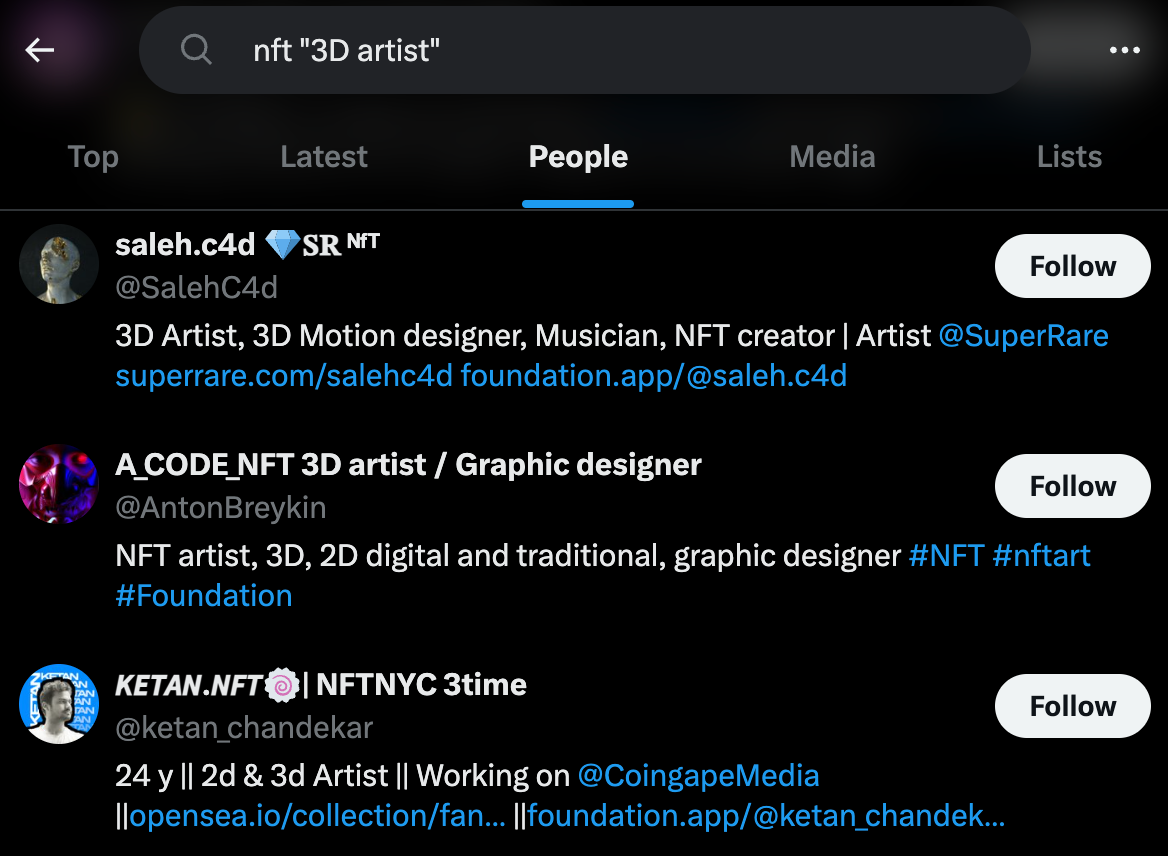
You can continue exploring additional platforms to connect with artists, as numerous websites are showcasing unique talent and offering distinctive features. Moreover, don’t overlook the opportunity to engage with active members of the Web3 community on platforms like X (Twitter). Utilize the advanced search feature within the web app to identify and connect with relevant individuals.
How to Source Quantitative Traders for Web3 Projects
Quantitative traders are responsible for trading financial securities using mathematical models and statistical analysis. In the context of web3 companies, these traders use their skills to analyze and trade cryptocurrencies. They work to identify and act on profitable opportunities in these markets, while also managing risk. This role involves assessing fresh prospects, crafting and validating strategies to leverage them, and implementing algorithmic execution for their deployment.
To be successful in this role, quantitative traders need a strong understanding of blockchain technology and its associated markets. They should be skilled in statistical modeling, market making, and understanding of derivative instruments and programming languages such as Python and C++.
Within the realm of finance, the roles of traders and quants (quantitative traders), while related, entail distinct responsibilities and skill sets. Traders are professionals tasked with executing trades on behalf of financial institutions such as banks, trading firms, or hedge funds. Their expertise lies in implementing trading strategies based on various methodologies, including fundamental analysis and quantitative analysis. They analyze financial statements, market trends, and other relevant data to make informed trading decisions. On the other hand, Quants are professionals specializing in quantitative analysis and modeling within the finance industry. Quantitative traders focus on developing computer-based trading strategies that automatically execute trades based on predefined criteria and statistical analysis of market data. They aim to generate value by capitalizing on market inefficiencies and trends.
In summary, while both traders and quants operate within the financial markets, traders focus on executing trades and implementing trading strategies based on various analysis methods. In contrast, quants specialize in developing and analyzing quantitative models to drive trading decisions.
Where Can Web3 Companies Find Talented Quantitative Traders?
If you’ve explored LinkedIn for quantitative trading professionals, you might have noticed a scarcity of individuals with the exact title “Quantitative Trader.” To broaden your search and yield more comprehensive results, consider incorporating alternative variations such as “Quantitative Crypto Trader,” “Quant Trader,” “Crypto Quant”, and simply “Quant”. However, be careful when using generic titles like “Trader,” as they may yield numerous irrelevant matches.
For precision, supplement your search with relevant keywords such as “Quantitative Finance,” “Quantitative Research,” “Algorithmic Trading,” “Algotrading”, “High-Frequency Trading,”, “HFT”, “Machine Learning,” “Financial Engineering,” “Mathematical Modeling,” “Market Making,” “Arbitrage,” and other keywords tailored to your specific job requirements.
Furthermore, consider targeting individuals with educational backgrounds in Financial Engineering, Quantitative Finance, Mathematical Finance, Computational Mathematics, Statistics, and related fields to identify candidates with the requisite expertise.
Although GitHub is primarily known as a platform for developers, it can also be a valuable resource for sourcing quantitative trading talent. Explore public repositories related to topics such as quantitative-trading, quantitative-finance, quantitative-models, trading-algorithms, algorithmic-trading, and quant-models. Some finance-related topics, like quantitative-finance, boast over 1000 public repositories. You need to thoroughly examine users who have created and contributed to repositories, as well as those who have starred, watched, or forked them. For example, there is an amazing repository with a curated list of libraries, packages, and resources for quants. It has 85 contributors, 15000+ stargazers, 662 watchers, and 2400 forks. While not every user may be directly involved in quantitative trading, exploring these repositories can lead you to discover new and relevant profiles.

Additionally, don’t overlook the potential of X (Twitter) in your quest to source quantitative trading talent. Utilize Twitter’s advanced search features to narrow down your hunt for quants. For instance, consider using “Quantitative Trading” instead of “Quantitative Trader” in your search to broaden your results. This approach ensures you not only discover individuals working as quants but also uncover relevant pages featuring information, software, companies, and more. Explore the profiles followed by these pages, as well as their followers and those engaging with their tweets, to expand your network and identify potential candidates.
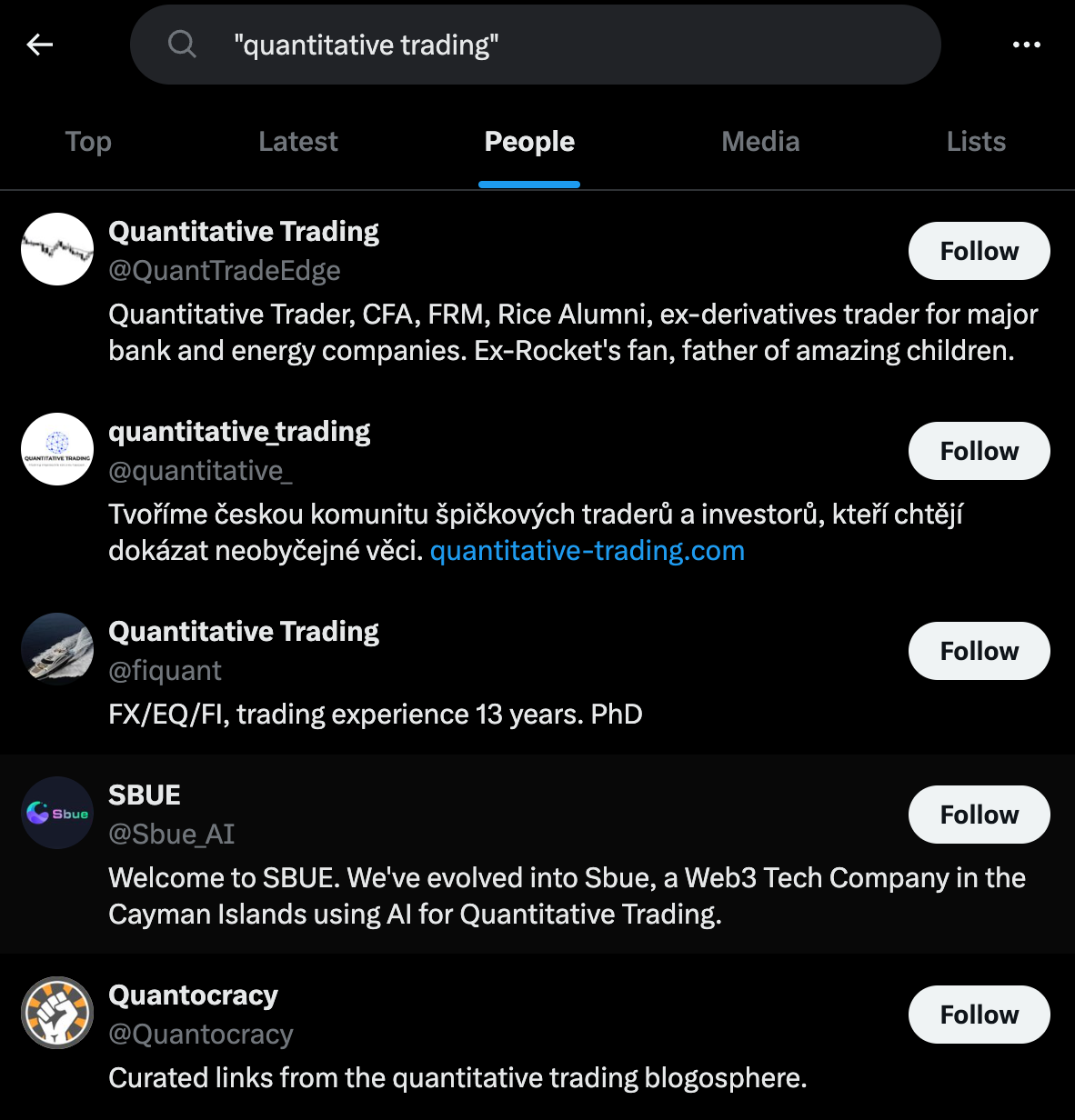
Additionally, try browsing through hashtags like #QuantitativeFinance, #AlgorithmicTrading, #QuantitativeTrading. Delve into the profiles of users who frequently post content related to these topics, along with those who interact with their tweets. Despite some users being less active in generating original content or having empty profile descriptions, you can infer their expertise based on their retweets and the accounts they follow.
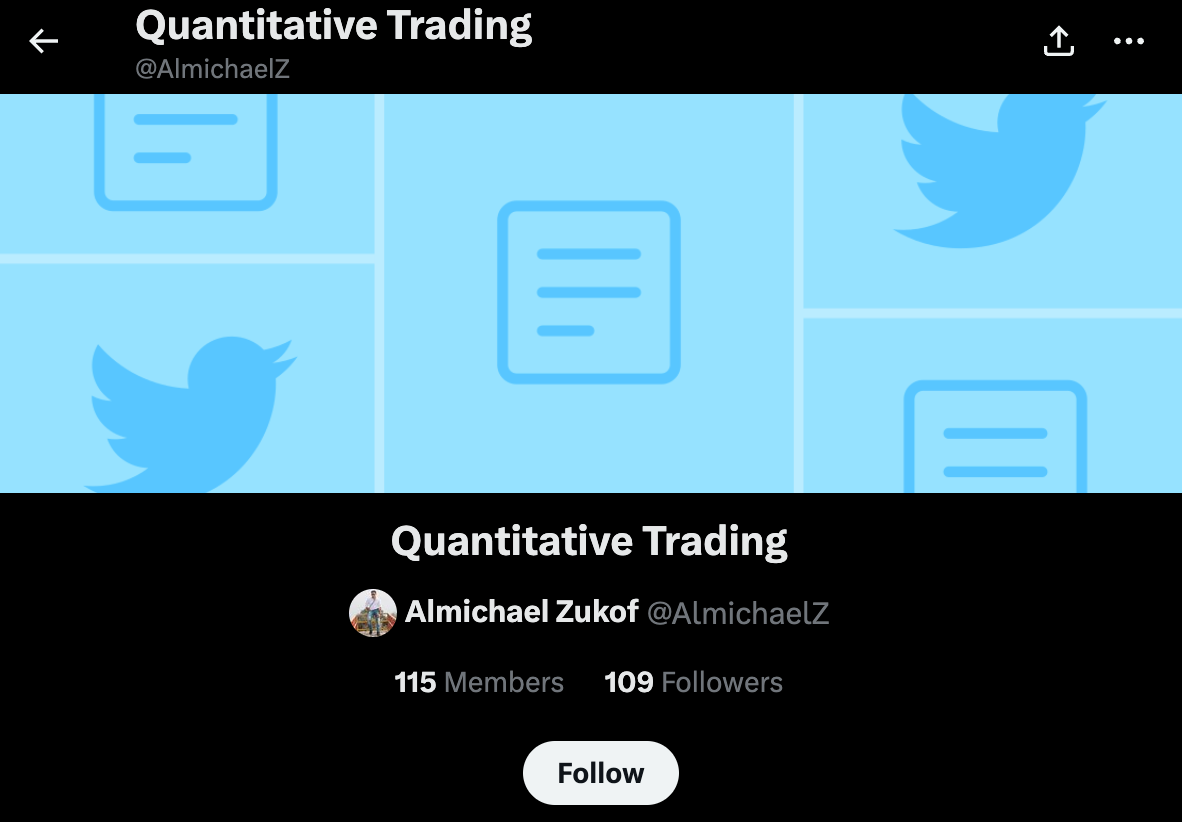
Twitter lists serve as another valuable asset in your search. While there may not be an abundance of lists dedicated exclusively to quantitative trading, it’s worth looking through the available ones. Take the time to thoroughly examine all members, followers, and the content shared within these lists. Although this approach demands additional effort, it can yield substantial results beyond the scope of traditional sourcing methods. By extending your search beyond LinkedIn, you can uncover profiles that receive fewer outreach messages from recruiters, enhancing your chances of identifying top-tier talent in the field of quantitative trading.
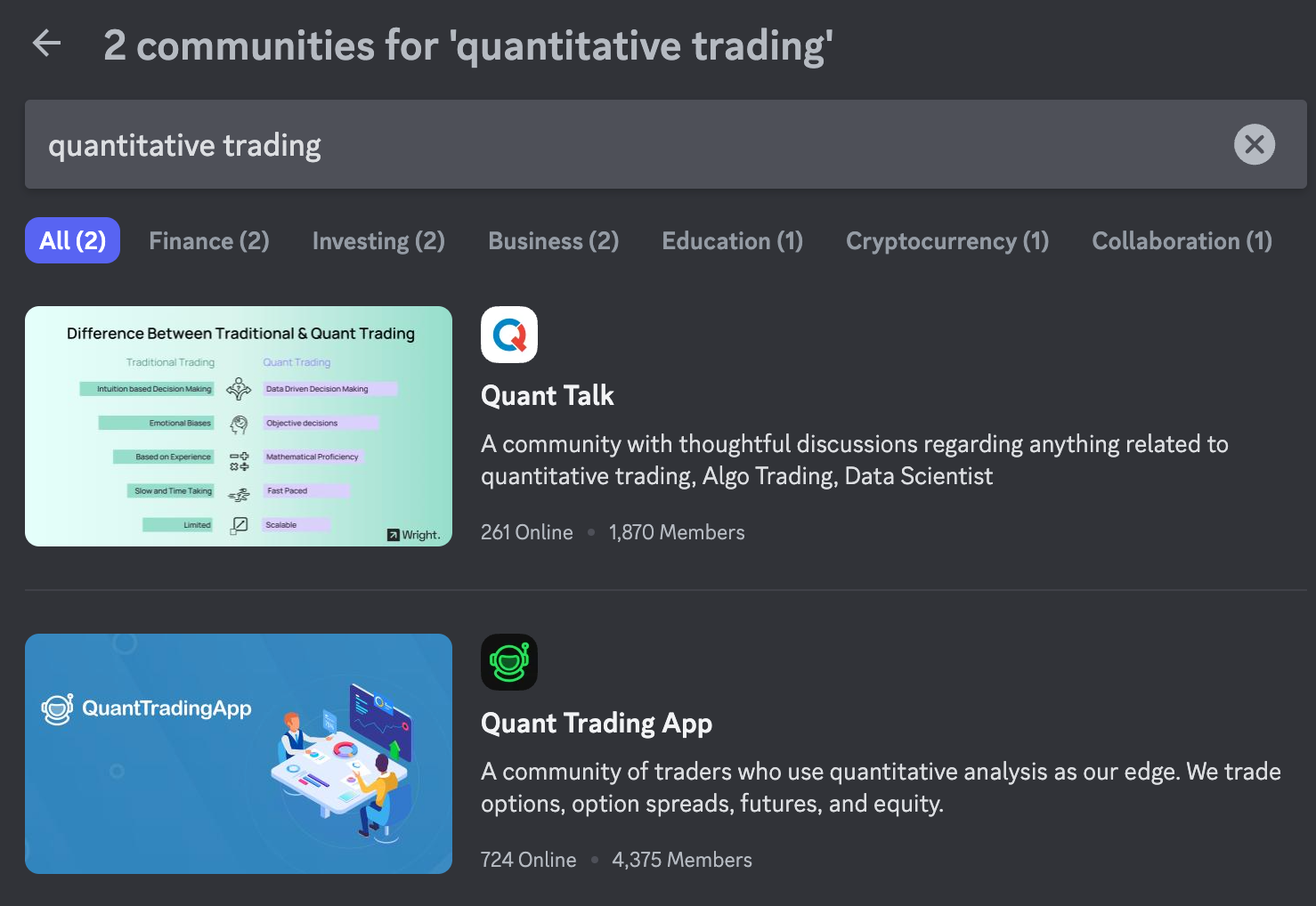
Discord has become widely adopted by the Web3 community due to its versatility, accessibility, and features tailored to community engagement and collaboration. Recruiters can leverage Discord to find talent by joining specialized servers and channels focused on quantitative trading, algorithmic trading, and other relevant topics. You can use an internal Discord search to identify relevant communities. Or use external websites like Disboard to look through communities listed and tagged there.
Reddit provides another avenue for recruiters to explore when searching for quantitative trading talent. Subreddits like r/quant serve as hubs for discussions, insights, and resources related to quantitative finance, algorithmic trading, and quantitative analysis. Recruiters can navigate these communities to discover experienced professionals, enthusiasts, and students passionate about quantitative trading.
Additionally, recruiters can leverage Reddit’s search function to find specific topics, keywords, or user profiles related to quantitative trading within the r/quant subreddit. Through proactive engagement and strategic outreach, recruiters can tap into Reddit’s vibrant community to source and recruit talented individuals for quantitative trading roles.
If you’ve ever delved into social networks exclusively tailored for investors and traders, you may have stumbled upon StockTwits. This social media platform is specifically tailored for investors, traders, and financial enthusiasts, making it an ideal space to explore for talent in quantitative trading. Recruiters can navigate through various discussions, sentiment analysis, and real-time market insights shared by users on StockTwits to identify individuals with expertise in quantitative finance, algorithmic trading, and market analysis.
By engaging with users, following relevant hashtags, and participating in discussions related to quantitative trading strategies and techniques, recruiters can establish connections and uncover potential candidates. Furthermore, StockTwits offers a search feature that allows recruiters to find users and conversations relevant to quantitative trading, enabling targeted outreach and networking within the platform.
Conclusion
In summary, the journey to sourcing exceptional talent for Web3 companies involves a multifaceted approach encompassing diverse platforms, targeted searches, and proactive engagement strategies. By leveraging the unique strengths of each platform and community, recruiters can navigate the complex landscape of talent acquisition with precision and efficacy, ultimately building high-performing teams poised for success in the dynamic Web3 ecosystem.